
925 sterling silver is one of the most popular materials for wholesale jewelry because it offers a strong balance of quality, appearance, and price. It is widely used for rings, necklaces, chains, earrings, pendants, bracelets, and iced out jewelry. For brands and retailers, 925 silver makes it possible to build attractive collections without the higher cost of solid gold.
What does 925 silver mean?
925 silver means the metal contains 92.5% silver and 7.5% other metals, usually added for strength. Pure silver is too soft for many jewelry designs, so sterling silver is more practical for daily wear and stone setting.
Plating options matter
Silver jewelry is often finished with rhodium plating, gold plating, rose gold plating, or black plating. Rhodium plating helps create a bright white finish and can improve resistance to tarnishing. Gold and rose gold plating give customers more color options, but buyers should understand that plated jewelry needs proper care.
Stone setting and design complexity
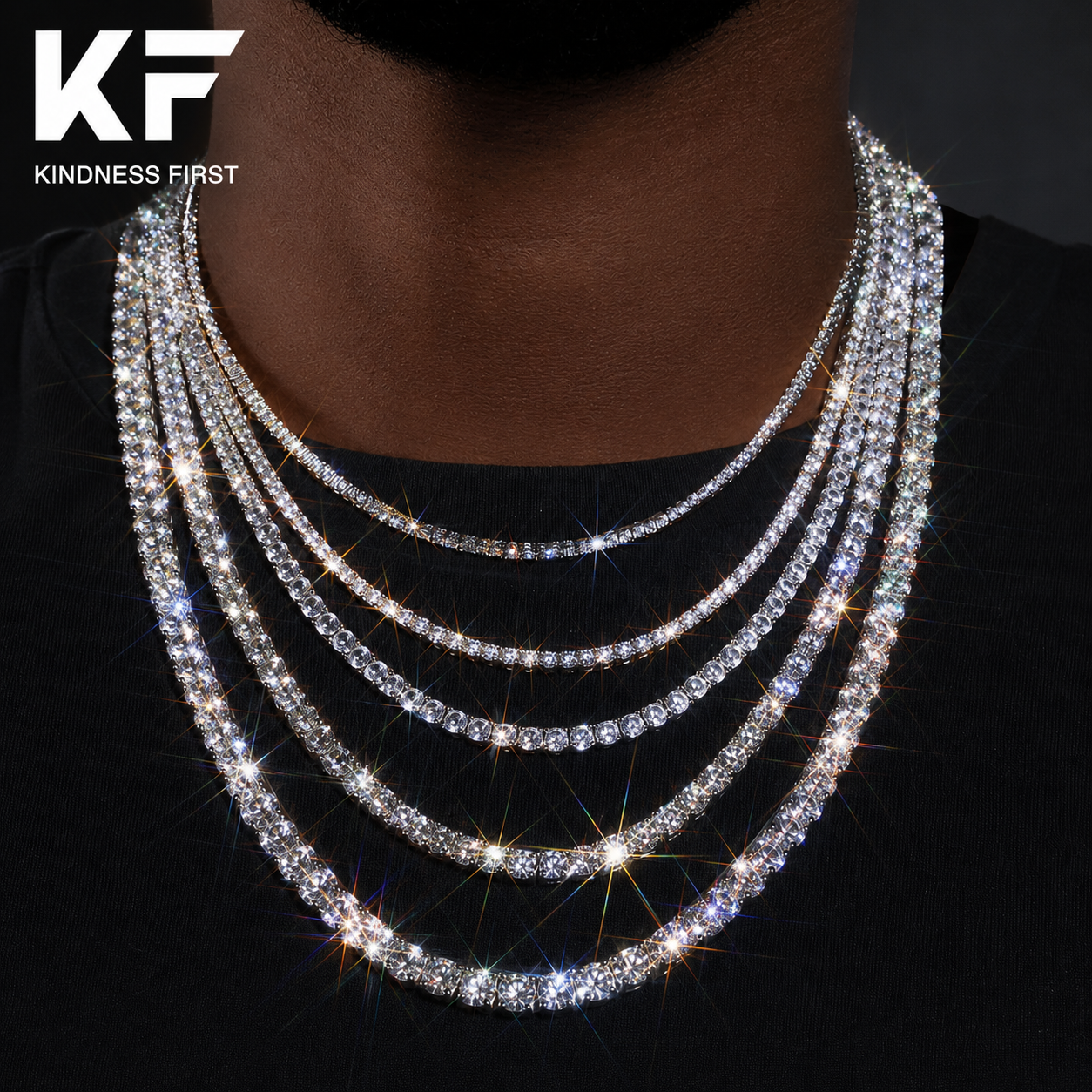
Wholesale silver jewelry may use moissanite, CZ, lab-grown diamonds, or colored gemstones. Iced out designs with many stones require careful setting and inspection. A low price is not useful if stones become loose or the finish is rough, so buyers should ask about quality control before placing bulk orders.
Samples and MOQ
Before bulk production, many buyers start with samples. Samples help confirm size, finish, weight, stone quality, and packaging expectations. MOQ depends on design complexity, material, and whether the item is custom or ready-to-produce. For private label jewelry, sample confirmation is one of the safest steps before scaling up.
Kindness First works with jewelry brands, retailers, designers, and wholesale customers. We can support custom designs, CAD review, sample development, and production for 925 silver jewelry collections.
Related Service: 925 Silver Jewelry Wholesale Supplier
Build a 925 sterling silver jewelry collection with custom plating, stones, samples and wholesale production.